The Caregiver Training Gap: What We See in the Field
- CFS Solutions DBS Team

- Mar 8
- 5 min read
After more than three decades working in healthcare many of these years working with durable medical equipment, from my early years with Don's Drugs Pharmacy, Apria Healthcare to now leading CFS Medical Supplies & Equipment-CFS Solutions DBS. I’ve had the opportunity to visit many homes, assisted living communities, and healthcare facilities.
One issue continues to appear again and again.
Many caregivers, both family members and hired staff, are expected to use medical equipment every day, yet many have never received structured training on how to operate it safely or effectively.
This isn’t a reflection on caregivers themselves. Most are doing their best with the information available to them. The reality is that the healthcare system often moves quickly, and equipment education can unintentionally fall through the cracks.
What the Data Shows
Research across the caregiving industry highlights just how challenging the current environment can be:
• Studies estimate:
Caregiver turnover in long-term care facilities ranges from 40% to over 80% annually depending on the role and facility.
• Home care agencies frequently experience caregiver turnover rates between 60% and 79% annually in some markets.
• According to national caregiver research, many family caregivers report feeling unprepared to manage medical or nursing tasks, including operating medical equipment.
High turnover and fast-paced care environments mean that new caregivers are often learning equipment operation informally or on the job.
What We Commonly See During Equipment Visits
During home assessments, equipment deliveries, and caregiver training sessions, we frequently observe situations such as:
• hospital beds not positioned correctly for safe transfers
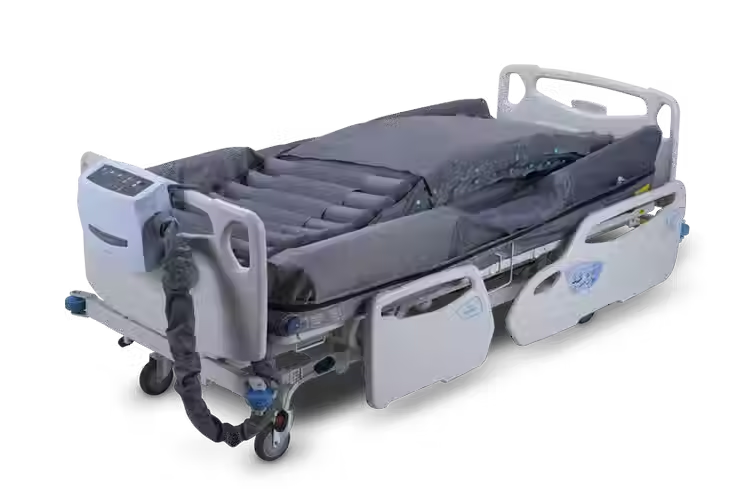
• pressure relief mattresses not being used as intended
• positioning chairs being used like standard wheelchairs
• caregivers bending or lifting in ways that could lead to injury
• equipment features families didn’t know existed
In many cases, equipment was delivered with a brief explanation, but caregivers rotate shifts and new staff members may not receive the same instruction.
Even Clinicians Don’t Always See Advanced Equipment
Another reality we see in the field is that some clinicians—including physical therapists and occupational therapists—may not always be familiar with certain specialized or innovative equipment solutions.
Healthcare professionals are trained across many areas of patient care, and with the rapid pace of technology and new product development, it can be difficult for any one professional to stay familiar with every equipment innovation available.
As a result, some advanced positioning systems, specialty beds, or mobility devices may simply be less familiar because they are not encountered regularly in certain clinical environments.
This is why collaboration between clinicians, equipment specialists, and caregivers is so important.
Why Training Matters
Medical equipment is designed to improve comfort, safety, and mobility, but when it isn’t used correctly it can create challenges for both the patient and the caregiver.
Proper education can help reduce:
• caregiver back injuries
• patient falls
• pressure injuries
• equipment misuse
• frustration for families navigating complex care situations
Education also helps caregivers feel more confident in the role they have stepped into, whether they are professionals or family members.
The Reality for Family Caregivers
Family members often become caregivers overnight. After a hospital discharge, they may suddenly find themselves responsible for managing equipment they’ve never seen before.
Without guidance, even simple functions, like adjusting bed height, using positioning features, or understanding pressure relief surfaces, can feel confusing.
This is one of the reasons we believe education is just as important as the equipment itself.
A Growing Need for Caregiver Education
As more families choose to care for loved ones at home, the need for accessible caregiver education continues to grow.
At CFS Solutions DBS, we focus on providing educational resources designed to help caregivers better understand:
• medical equipment options
• home safety considerations
• positioning and mobility solutions
• practical ways to support patient comfort
Our goal is not only to provide equipment solutions, but also to share knowledge that helps caregivers feel more confident supporting those they care for.
When caregivers are properly informed, the difference in comfort, safety, and quality of care can be significant.
Data Sources
American Health Care Association (AHCA). State of the Long-Term Care Industry Report.https://www.ahcancal.org
Home Care Association of America (HCAOA). Home Care Benchmarking Study.https://www.hcaoa.org
AARP & National Alliance for Caregiving. Caregiving in the United States.https://www.aarp.org/caregiving
CFS Solutions DBSEducation • Consulting • Caregiver Resources
📱 Download the CFS App for blogs, caregiver resources, educational videos, and healthcare podcast conversations.
Educational content provided by Tara Slaughter, Certified Durable Medical Equipment Specialist, State of CA HDMR Exemptee
A Real Example from the Field

Here is one example of something we encounter more often than people might expect.
A family recently purchased an advanced care bed designed with additional positioning features. The bed could raise higher than a standard hospital bed, which made it easier for caregivers to safely assist the patient while reducing the need to bend over repeatedly. This type of equipment can greatly improve both patient comfort and caregiver safety.
Our white-glove delivery team installed the bed and provided training to the primary caregiver at the time of delivery. Everything appeared to be working well.
Several days later, we received a call from the patient’s daughter explaining that one of the caregivers believed the bed was not functioning properly.
To help resolve the issue quickly, we scheduled a virtual FaceTime call with the daughter and reviewed the bed’s features step-by-step. During the call, we confirmed that the bed was working correctly. The daughter then understood how the functions operated and was able to demonstrate them to the caregiver.
Once the features were explained again, the issue was resolved and there were no further concerns.
When Equipment Is Misunderstood
Situations like this are more common than many people realize.
Sometimes caregivers may feel uncomfortable or intimidated when using equipment that has multiple features or advanced positioning options. When someone is unsure how to operate the equipment, it can be easy to assume the device is not working correctly.
The challenge is that when equipment is not used properly, it can unintentionally create safety concerns or prevent patients from receiving the full benefits of the product.
In some cases, equipment can even be damaged when features are used incorrectly.
For families who have invested in specialized or advanced equipment—especially when insurance does not cover the cost—this can become frustrating and expensive.
Why Education Matters
This is why education and training are so important.
When caregivers understand how equipment works, they are better able to support the patient safely and comfortably. Training also helps caregivers feel more confident using equipment rather than feeling unsure or hesitant.
Most caregivers truly want to provide the best care possible. With the right education and guidance, equipment can become a valuable tool that supports both the patient and the caregiver.
These real-world experiences are part of the reason we continue to focus on caregiver education and equipment training as an important part of supporting families.


Comments